
Technology is moving at lightning speed, and one of the biggest questions today is: How is Artificial Intelligence (AI) shaping the future of education?
Educators, parents, and tech innovators across Maryland are weighing in as schools explore how AI can support both teachers and students.
The Rise of AI in Classrooms
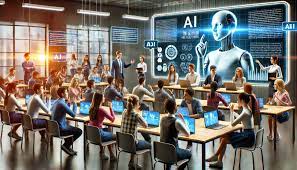
Gone are the days of chalkboards and stacks of notebooks. Today’s students are growing up with laptops, tablets, and interactive AI tools that are redefining how they learn.
“AI is coming whether you like it or not,” said Brandon Phillips, founder of Future Think Hub and creator of an AI learning platform. “The best thing we can do is get ahead of it.”
A Personalized Learning Experience
At City Springs Elementary School, students are already testing new AI software through the Future Think Edge summer program.
The platform creates a virtual personal teacher for every child. It studies each student’s strengths, weaknesses, and learning pace, then delivers lessons in subjects like math, science, and coding in a game-like, engaging way.
“It feels almost human,” Phillips explained. “The software learns who you are and builds a profile to teach you at your own level.”
Students like De’Aria Johnson, a seventh-grader at City Springs, say the program is exciting:
“It’s super fun and cool. If I don’t understand something in class, I can just ask the AI to explain it again.”
Teachers and AI: A Partnership
City Springs Assistant Principal Rob Summers believes technology must prepare kids for tomorrow’s world, not yesterday’s.
“The teacher is still leading the class,” Summers emphasized. “But AI provides one-on-one support so no student gets left behind.”
Phillips agreed, adding that whether a student is gifted or has special needs, AI ensures every learner receives the same attention and opportunity.
Online Schools Leading the Way
AI isn’t only reshaping traditional classrooms—it’s fueling the growth of online learning.
Dr. Aileen Hawkins, CEO of Inspired Online Schools USA, believes her school is ahead of the curve.
“Flexibility is unmatched,” she said. “Students can learn anytime, anywhere, and even take their classroom on the go.”
What started as a school for student-athletes has now expanded nationwide, offering live online classes, augmented reality lessons, and global peer interaction.
With virtual labs and AR museums, students can explore the human body or walk through history without leaving home.
Preparing Students for the Jobs of the Future
Dr. Hawkins compared today’s shift to when calculators were first introduced in classrooms.
“Just like calculators became essential, AI is now critical for the jobs of the future,” she said. “It helps students learn to reason, analyze, and create—skills that are vital for tomorrow’s workforce.”
Embrace, Don’t Resist
While surveys show that 64% of teens report their schools don’t yet encourage AI tools, experts agree resisting technology is not the answer.
“If we bury our heads in the sand, outcomes won’t be positive,” said Summers.
“We can either take control of AI or let it control us,” Phillips added.
Final Thought
AI is not here to replace teachers—it’s here to empower both educators and students. From personalized learning to virtual classrooms, AI is shaping education into something more flexible, inclusive, and future-ready.
The message from Baltimore educators is clear: Don’t fear AI—embrace it.