
A Legacy of Reinvention
Jaguar, the legendary British car brand with over 90 years of history, is undergoing a dramatic transformation — and not everyone agrees with the direction it’s taking.
From its early days building motorcycle sidecars, Jaguar made headlines with its racing success in the 1950s and the launch of the iconic E-Type in 1961. Over time, it became the car of choice for royals, diplomats, TV detectives, and even James Bond villains.
Yet despite its glamorous image, Jaguar has struggled financially for decades. Through four different owners, none managed to secure long-term profitability.
The Struggle Behind the Style
Jaguar’s models like the XF and F-Type tried to tap into themes like British elegance, speed, masculinity, and luxury. But these efforts failed to reverse the company’s mounting losses.
Its reputation was also hurt by quality concerns — at one point, buyers joked they needed two Jaguars: one to drive and one for spare parts.
Introducing “Project Roar”: A Radical Shift
To address years of setbacks, Jaguar introduced “Project Roar” in 2024 — a bold transformation plan under Tata Motors, its parent company.
Key goals include:
- Becoming an all-electric brand by 2026
- Investing £18 billion to upgrade manufacturing facilities
- Retraining employees for the EV future
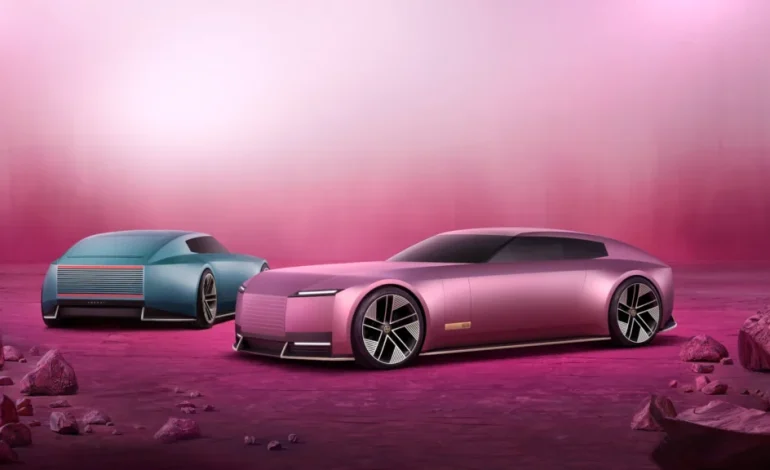
The first product of this vision, the I-Pace SUV, is already in showrooms. But the real focus is on the Type 00 — a striking, high-end electric vehicle priced above £100,000.
Type 00: A Concept That Divides Opinion
Unveiled at Miami Art Week in 2024, the Type 00 is unlike any Jaguar before. With a new minimalist logo and sleek futuristic design, it aims to blend “fearless creativity” with luxury.
At over 5.1 meters in length, it’s longer than most European cars — posing challenges in key markets like the UK and EU.
But Jaguar’s Chief Creative Officer, Gerry McGovern, is unfazed. He believes the goal isn’t to please everyone, but to spark strong emotional reactions — even controversy. According to him, “You don’t need to be loved by all to be iconic.”
Changing the Business Model
Instead of chasing volume, Jaguar plans to sell just 30,000 cars a year — half of its previous target. These vehicles will be sold by invitation only, through exclusive pop-up locations in luxury urban districts.
This strategy targets a new kind of customer: young, wealthy, global collectors — the kind of people who were early adopters of products like the Apple Watch or Tesla Cybertruck.
Marketing That Shocks: Love It or Hate It
Jaguar’s bold advertising campaign has become a topic of heated discussion. A 30-second teaser launched in late 2024 showed no cars at all. Instead, it featured fashion models, surreal landscapes, and phrases like:
- Create Exuberant
- Live Vivid
- Break Moulds
- Copy Nothing
Some praised the ad’s creativity; others were outraged. Critics — including loyal customers and brand insiders — saw the campaign as “out of touch,” “woke,” or even a betrayal of Jaguar’s rich heritage.
Despite backlash, the campaign racked up over 160 million views, proving that it got people talking.
A Strategic Gamble — Or a Marketing Masterstroke?
Jaguar CEO and Managing Director Rawdon Glover defended the campaign as “bold and socially relevant”, stating that the aim was to put Jaguar back into the cultural spotlight.
Much like Marmite’s famous “love it or hate it” campaign, Jaguar’s approach is intentionally divisive — and possibly genius. In today’s crowded market, being memorable and sparking debate could be the key to standing out.
Conclusion: Can Creativity Drive the Future?
Jaguar’s Project Roar is more than a product launch — it’s a full reimagination of what the brand stands for. Whether this gamble leads to long-term success or falls flat depends on how well today’s buyers respond to bold ideas.
The question remains:
Can controversy be a strategy — and will this be Jaguar’s comeback moment or its biggest misstep yet?
🔑 Key Takeaways for Business Students and Marketers
- Radical rebranding can alienate loyal customers but attract new segments.
- Emotional engagement — even negative — may be more effective than mass appeal.
- Product exclusivity and lifestyle branding are powerful tools in luxury markets.
- Legacy brands must walk a fine line between honoring heritage and embracing change.