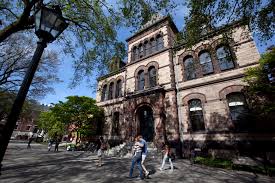

Brown University has strongly urged the US Department of Homeland Security (DHS) to withdraw a proposed rule that seeks to limit the duration of student visas, warning that the move could discourage global talent from studying in the United States and harm the competitiveness of American higher education.
🎓 Proposed Rule Could Reshape International Education in the US
Last month, the DHS introduced a new proposal that could significantly change how international students and scholars live and study in the country.
The rule aims to replace the current “duration of status” policy—which allows students to stay as long as they maintain valid enrollment—with fixed visa periods for F, J, and I visa holders.
If approved, the regulation would require students to reapply for visa extensions periodically, undergo biometric screening, and follow stricter procedures when changing academic programs or majors.
⚠️ Brown University Raises Concerns Over Fixed Visa Periods
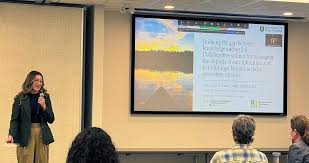
In a detailed letter submitted on September 29, 2025, Asabe Poloma, Associate Provost for Global Engagement at Brown University, called on the DHS to reconsider the rule, emphasizing that it would discourage skilled international students and affect the country’s research ecosystem.
“These changes would deter talented individuals from choosing the United States for study and innovation,” Poloma wrote. “They would weaken America’s higher education system, disrupt research and impact workforce pipelines in critical industries.”
Under the proposed rule, F and J visa holders would be admitted for a period tied to the length of their academic program, not exceeding four years. Any extension would require additional DHS approval, adding to students’ uncertainty.
💰 Increased Financial and Administrative Burdens
The proposed rule would place extra costs and paperwork on both students and universities.
International students might have to apply for multiple visa renewals, seek legal assistance, and pay additional fees to stay compliant.
Universities, in turn, would face increased administrative work, including continuous tracking of visa expirations and reporting to federal authorities.
Poloma warned that these challenges could divert resources away from academic priorities and strain university systems.
📚 Restrictions Threaten Academic Flexibility
One of the most criticized aspects of the proposal is its tight control over program changes.
- Undergraduate students on F-1 visas would not be allowed to change their major or degree level during their first academic year, except in rare cases like school closures.
- Graduate students would face even stricter limits, with no option to switch programs or research areas after enrollment.
Additionally, students who finish a program would be barred from pursuing another degree at the same or lower level under the same visa type — a policy Brown University described as “arbitrary and harmful.”
Poloma noted that such restrictions could particularly affect Ph.D. and dual-degree students who require more time or flexibility to complete their studies.
🏛️ Impact on US Competitiveness and Innovation
Brown University’s stance mirrors growing concern across US universities. The fixed visa rule could make the United States less attractive to international students, pushing them toward countries with more flexible immigration policies like Canada, the UK, and Australia.
“The proposal could disrupt academic and research pathways vital to innovation, scientific progress, and economic growth,” Poloma warned.
Experts fear that reducing academic flexibility will not only limit diversity and global collaboration but also undermine the US’s reputation as a leader in higher education.
🔍 The Broader Policy Debate
This ongoing debate reflects a larger challenge for US policymakers — balancing immigration control with the need to sustain global competitiveness in education.
For thousands of international students and scholars, the outcome of this regulation could determine whether they continue to view the United States as the world’s top education destination.
📢 Conclusion
Brown University’s firm opposition to the student visa duration rule highlights the potential risks to innovation, education, and workforce development in America. The university urges the DHS to maintain the current duration-of-status policy, which has long supported the growth of global academic collaboration and student success in the US.