
After two years of intense conflict in Gaza, Palestine’s Minister of Education Amjad Barham has appealed to the global community to help protect and rebuild higher education. The war has caused devastating losses, destroying campuses, killing students and staff, and pushing the entire education system to the brink.
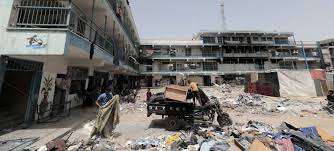
In an interview with University World News, Barham said over 80% of university buildings in Gaza—including labs, workshops, and classrooms—have been destroyed. Nearly 400 schools were damaged or demolished, and more than 60 university facilities were completely wiped out.
Despite the destruction, he said Palestinians remain determined to defend their right to education, calling it a key foundation for building an independent Palestinian state.
Severe Damage and Ongoing Risks
Barham stressed that not a single university hall remains usable for in-person learning in Gaza. The few surviving structures are being used as shelters for displaced families.
Even though a US-brokered ceasefire has been in place since 10 October 2025, frequent security tensions make the situation uncertain. Barham said rebuilding cannot begin until the safety of students and staff is guaranteed.
So far, 241 university employees have been killed, including three university presidents and nearly 100 academics. In addition, 1,351 university students have died during the conflict. Thousands more have been injured.
Barham called the loss of professors and scientists “a loss beyond measure”, noting that physical buildings can be rebuilt, but intellectual leaders cannot be replaced.
Education Challenges in the West Bank and East Jerusalem
The crisis extends beyond Gaza. In the West Bank, higher education is crippled by settler attacks, funding restrictions, salary delays, and roadblocks. Arab students in East Jerusalem struggle with severe movement limits, with entry and exit sometimes “almost impossible”.
Financial hardship is worsening the situation. Many students can no longer afford tuition, threatening the stability of universities and risking a mass migration of skilled educators.
Resilience Through Virtual Learning
Despite the destruction, Palestinians have kept their educational system running through e-learning and remote teaching. Teachers in the West Bank teach online classes to Gaza students every evening, ensuring thousands remain enrolled.
Barham confirmed that despite the war, Palestine completed two full academic years through virtual schooling. The government also successfully conducted the Tawjihi high school exams, with 90% of the 60,000 candidates expected to enroll in universities.
He described the exams as “a symbol of hope” for families living through hunger, displacement, and violence.
Priorities for Rebuilding Higher Education
Barham said the ministry’s top priority is to bring back face-to-face education in Gaza by establishing temporary learning centers while campuses are rebuilt.
However, major reconstruction requires:
- Security guarantees that universities will not be attacked again
- Safe, scientific debris removal to avoid environmental hazards
- Massive international funding amounting to hundreds of millions of dollars
Rebuilding schools alone could cost several billion dollars.
International Cooperation and Student Support
The ministry is working with Arab countries, allowing displaced students to continue their studies abroad as visiting or transferred students, ensuring they can graduate and support their families.
Partnerships with UNESCO, Education Above All, Taawon, and PAMA Foundation are underway. International professors are already offering online teaching support for Gaza students.
However, Barham said more assistance is urgently needed to:
- Pay staff salaries
- Prevent an exodus of academic talent
- Support students with tuition fees
- Keep universities operational
In Gaza, external aid and student fees are currently the only financial lifeline.
Transparent Governance of Aid
Barham assured global donors that aid is handled through strict governance systems, including the General Directorate of Grants and the Student Loan Fund, both trusted for their transparency. No corruption claims have ever been linked to these processes, he said.
Impact on Research and Academic Development
Scientific research has slowed due to a lack of funds, laboratories, and equipment. But the ministry continues to support international academic partnerships, encouraging researchers to collaborate abroad and return with new expertise.
Unwavering Commitment of Educators
Barham praised Palestinian educators for their courage and dedication, calling university professors “parents to the nation”, guiding students through some of the hardest years in modern history.
He reaffirmed that Palestinian universities remain neutral, professional, and autonomous, governed by long-established academic standards.
A Call to Protect the Future of Palestinian Education
Barham ended with a powerful appeal to the world:
“Safeguarding education in Gaza—supporting its students, teachers, and institutions—has been our mission for two years. We will continue with full determination.”